Moisture Testing and Mitigation in Bowie, Maryland, with published price ranges up front, the rooms measured and the subfloor checked on site, and one written figure before any work begins.
Moisture Testing and Mitigation in Bowie, MD by Bowie LVT Flooring Company
Concrete looks dry long before it tests dry. We test moisture in Bowie slabs and subfloors before vinyl installation and apply mitigation where readings call for it, so new floors in basements, additions, and ground level rooms go down over ground that has been measured rather than guessed at. Bowie basements eventually meet water in some form, from a sump event to slow vapor moving up through a slab year after year. Testing separates those two very different problems.
Old Town Bowie houses and finished basements across the city share the same physics. Soil holds moisture, slabs transmit vapor, and flooring traps whatever rises beneath it. A floor that bubbles or loosens months after installation is often reporting a moisture story a meter could have read before the first plank was cut.
How Testing Reads a Slab or Subfloor
Surface meters give a quick comparative scan, useful for finding the wet corner of a basement or tracing where a past leak traveled across plywood. Deeper readings come from probes and in slab sensors placed through small drilled points, which measure conditions inside the concrete rather than on its face. Product requirements for the flooring being installed decide which readings govern the go or wait call.
Wood subfloors get pin meter readings near exterior doors, below bathrooms, and anywhere staining suggests history. A single number rarely decides anything. Patterns decide, readings compared between the low corner and the center of the room. Fresh concrete in additions needs curing time regardless of readings, since young concrete releases moisture on its own schedule.
Mitigation Options When Readings Run High
Waiting is the cheapest mitigation when a slab is drying after a flood or a plumbing repair, and fans plus dehumidification shorten that wait in a measurable way. Vapor reducing primers form the next step, rolled onto prepared concrete to slow vapor transmission to levels the flooring system accepts. Sheet membranes and rated adhesive systems serve other installations.
Exterior causes limit what interior products can achieve. A downspout dumping at the foundation or soil graded toward the house will keep feeding a slab no coating should be asked to fight alone. We name those findings when we see them. Flooring installation in Maryland sits within MHIC governed home improvement work as a market matter, and testing supports that installation market.
Recent Project: Moisture Testing and Mitigation in Old Town Bowie
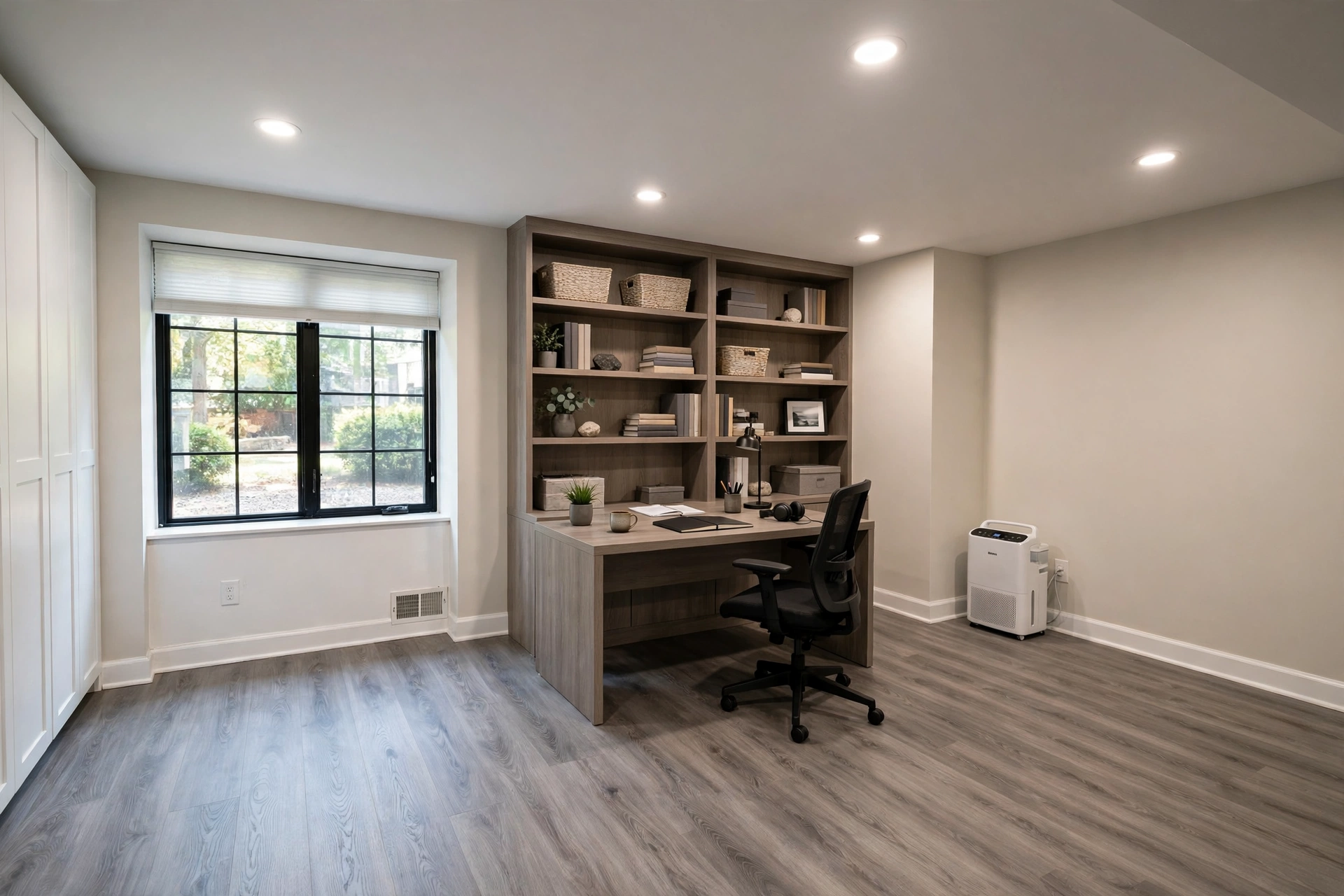
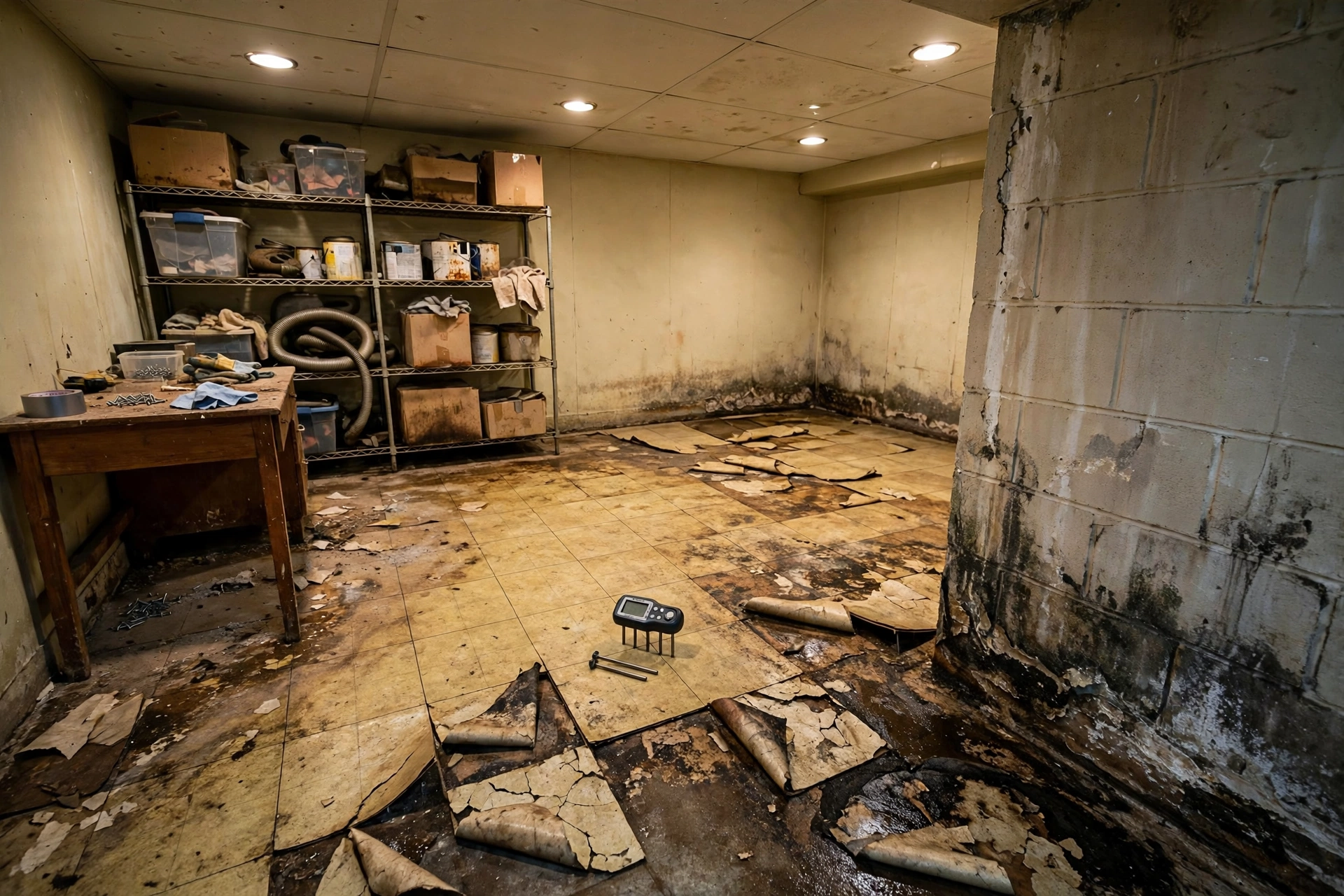
BEFOREAFTER
A finished basement in Old Town Bowie was scheduled for new waterproof plank after carpet removal, but grid readings across the slab showed a clear high zone in the low corner near the sump pit and readings near product limits elsewhere. Crews mapped the slab, applied a vapor reducing primer across the full floor with added attention at the wet corner, and retested before clearing the room for installation. A downspout discharging at the foundation wall was flagged as a contributing cause.
Turnaround
Two visits across four days, allowing primer cure and a confirming retest.
Final Price
$870
Moisture Testing and Mitigation Cost in Bowie, MD
No Bowie company publishes a local price list, so published figures provide the planning frame. Published figures for moisture testing and mitigation run $540 to $1,450 for a typical residential room or basement zone. Published guides put luxury vinyl plank installed at $3 to $8 per square foot, a 1,000 square foot job at $3,000 to $8,000, and install only labor commonly at $1.50 to $4.50 per square foot for the flooring work that follows.
Testing alone sits at the low end. Cost climbs when square footage under primer grows, when slab patching must precede a coating, or when repeated retests follow a drying period. The quote separates testing from treatment so each decision stays visible.
When to Ask for Testing on Its Own
Order testing before choosing flooring for any basement that has flooded, smelled musty through a wet season, or shown efflorescence, those white mineral lines where slab meets wall. Ask also after plumbing repairs under a slab. Bring water event dates and sump pump age to the visit.
How much does moisture testing and mitigation cost in Bowie, MD?
Published figures run $540 to $1,450, with testing alone at the low end and primer treatment across larger areas raising the total.
Does waterproof vinyl still need moisture testing below it?
Yes. A waterproof core protects the board itself, but vapor rising through a slab can collect under any floor covering over time.
How long does testing take?
A meter grid across a typical basement plus probe readings usually fits inside one visit of about an hour.
Can mitigation fix a basement that floods?
Mitigation manages vapor moving through concrete. It does not stop bulk water from a flood, a failed pump, or a wall leak.
What readings are too high for vinyl?
Limits vary by product and adhesive system, so testing compares your slab numbers against the specific flooring you intend to install.
Should testing happen before or after old flooring comes up?
Slab testing needs exposed concrete, so carpet or old flooring over the test area has to come up first.
Get Your LVT Flooring Quote
Tell us which rooms need floors. We read every request that comes in and respond with the published range for that kind of work and the next step, starting with a visit to measure the rooms and check the subfloor.
Prefer to talk it through first? Send the form and we will call you back at the number you give us.