Bowie, Maryland
Glue Down Vinyl Flooring in Bowie, MD
Glue Down Vinyl Flooring in Bowie, Maryland, with published price ranges up front, the rooms measured and the subfloor checked on site, and one written figure before any work begins.
Bowie, Maryland
Glue Down Vinyl Flooring in Bowie, Maryland, with published price ranges up front, the rooms measured and the subfloor checked on site, and one written figure before any work begins.
Before click lock took over the aisles, vinyl floors were glued, and in the right rooms glue down is still the better answer. It sits thin. It feels solid, with no hollow click under a heel and no floating field movement. We install glue down vinyl flooring in Bowie homes and small workspaces where a firm, quiet, low profile floor is what the room asks for.
Glue down also repairs differently. A damaged piece can be lifted and replaced with a fresh piece set into new adhesive, without unlocking a whole section of floor.
Dining rooms with castored chairs suit glue down well, since a glued floor does not shift under rolling loads. Kitchens in Collington area homes where clearance runs tight benefit from the thin profile, which adds almost no height at door swings and dishwasher openings.
Floors that are already very flat are natural candidates, since glue down vinyl follows the surface below it closely. A wavy floor argues against it: thin material over a dip shows the dip, in light and underfoot, every day.
Spreading adhesive looks simple until it is not. The glue needs open time to turn from wet to tacky, and pieces set too early swim while pieces set too late fail to stick. A humid Bowie August afternoon and a dry heated January morning are different jobs wearing the same name.
Preparation is stricter than for click lock. Every patch, seam, and fastener mark must be sanded and skimmed smooth, because thin vinyl prints imperfections through as it settles. Rolling the finished floor presses pieces into full contact, and furniture returns on a schedule, not on impulse, until the bond has set.
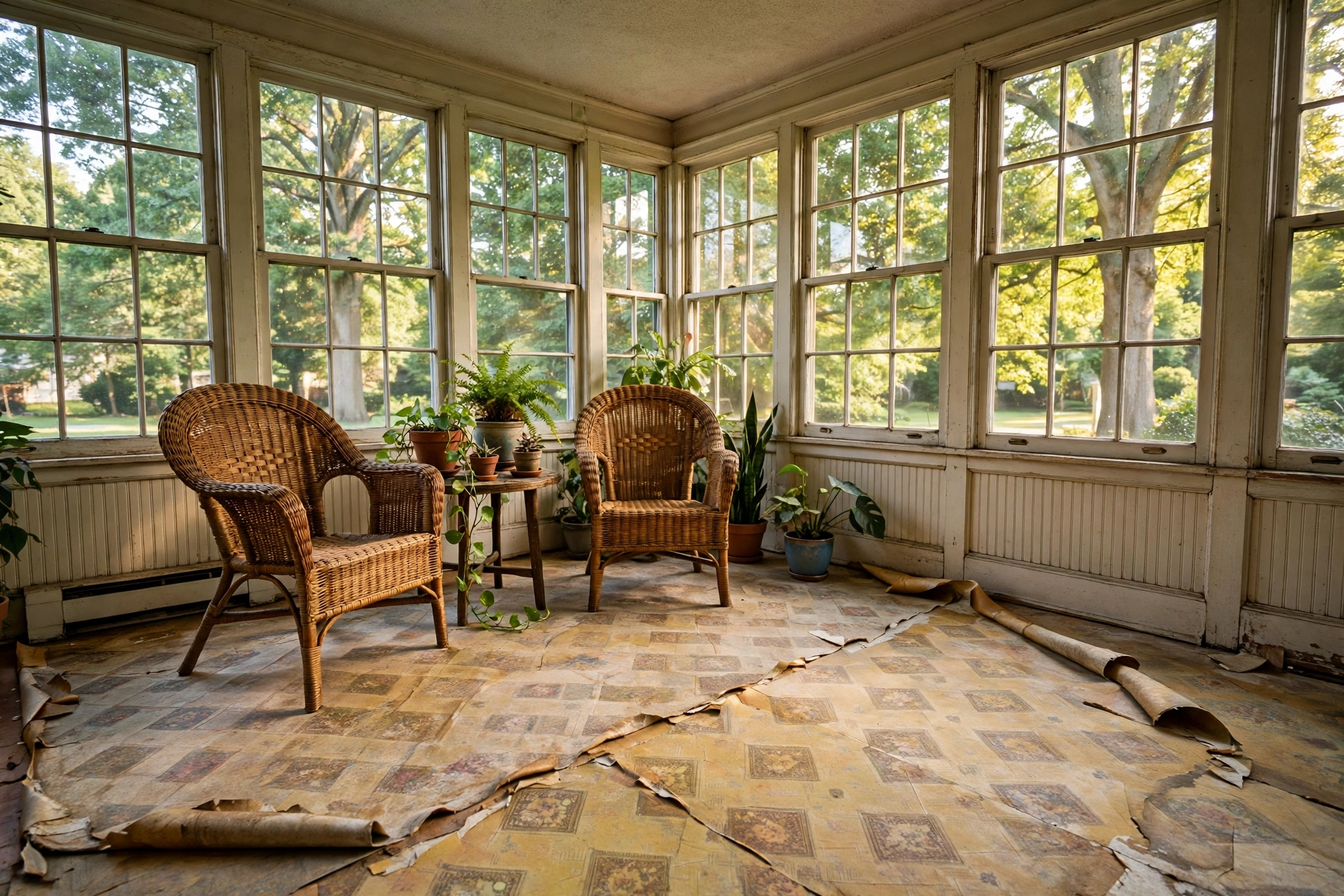
A Collington dining room and adjoining study had tired carpet over a flat, sound plywood subfloor. We removed the carpet, skimmed the underlayment seams, and sanded the field smooth before spreading adhesive in sections. Glue down vinyl tile in a muted stone pattern went in across both rooms, rolled for full bond, and finished with low profile transitions at the hallway.
Glue down budgets hinge on skim and sand preparation, yet published totals set the frame: $3,000 to $8,000 for the 1,000 square foot example in the guides. Inside that frame, glue down vinyl flooring for this service runs $2,700 to $6,100. Labor alone, in published figures, sits at $1.50 to $4.50 per square foot. The installed rate is $3 to $8 per square foot. With no Bowie list published, planning rests on published figures and this service range.
Preparation labor runs higher than for click lock because the surface must be near perfect. Smooth existing floors land lower; underlayment replacement and heavy skim work land higher.
Start with the floor you have. Flat and sound points toward glue down as a strong candidate. Uneven or questionable points toward a rigid floating product that can be corrected with leveling, or toward fixing the subfloor first either way.
Then consider the life of the room. Rolling chairs and a wish for single piece repairs favor glue. A room likely to change again in a few years can favor a floating floor that lifts without adhesive work. Neither method wins everywhere.
For this service the range is $2,700 to $6,100. Published guides put installed luxury vinyl at $3 to $8 per square foot, and install only labor commonly at $1.50 to $4.50 per square foot in published figures. Surface preparation is the main variable.
The vinyl pieces themselves do not absorb water, and a glued installation has no floating gaps at the edges of a field. Standing water and leaks should still be cleaned and fixed promptly, since subfloors below any vinyl can be damaged by water that gets underneath.
Yes, and that is one of its strengths. A single damaged tile or plank can be lifted and a fresh piece set in its place, matched from attic stock. Keeping spare pieces from the original installation makes future repairs nearly invisible.
Light foot traffic is usually fine once the installer clears it, but furniture and rolling loads wait until the adhesive has cured, commonly about a day. The exact timing for your product is stated at handover, and it is worth honoring.
Over wood subfloors, a smooth underlayment layer is common so seams do not print through. Over a smooth, sound slab, product may bond directly.
Yes, particularly where appliance clearance is tight, since the thin profile adds little height. The floor must be flat and the adhesive work timed carefully around a busy household schedule. Both points get covered during the quote visit.
Tell us which rooms need floors. We read every request that comes in and respond with the published range for that kind of work and the next step, starting with a visit to measure the rooms and check the subfloor.
Prefer to talk it through first? Send the form and we will call you back at the number you give us.